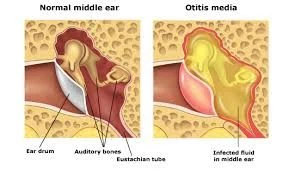
Most of us who have had the torturous pleasure of raising a child have gone through a long night or two helping a young one wrestle with an ear infection. Ear infections happen when the tube that drains the middle ear (called the eustachian tube) into the back of the mouth swells, gets blocked and allows a virus or bacteria to set up shop in the middle ear cavity. This leads to pressure in the now sealed off cavity which pushes on the ear drum causing pain.
Chronic ear infections are associated with food sensitivity (which causes eustachian tubes to swell in the first place) in about 9 out of 10 cases. Evidence based medicine tells us that using antibiotics in ear infections doesn’t make a difference when it comes to pain at 24 hours, getting an ear infection in the other ear, whether or not another ear infection occurs, deafness, perforation of the ear drum or even for the more dangerous mastoiditis.
Antibiotics do, however, REDUCE pain at 2 to 7 days in 6% of patients and INCREASE vomiting, diarrhea and rash in 6% of patients, a trade-off that for this father doesn’t make antibiotics a go-to therapy. The treatment that evidence-based medicine shows does make a difference is controlling pain. One of my pharmacy teachers jokingly sais vitamin A is the best way to go…and by vitamin A he means Acetaminophen (Tylenol).
Perhaps second to so-called “vitamin A” is another very powerful non-medicinal pain reliever. What might that be? Perhaps being held by mom? A lollipop? A hot cloth? A plant extract? Nope, turns out the second most powerful pain reliever for kids, which actually competes with Tylenol for effectiveness, is watching a video. If your house has an unwelcome and frequent ear-guest consider having your child tested for food sensitivities, managing pain with Tylenol or a favourite video and using antibiotics only if the pain persists beyond 3-4 days or if your child is really ill, always under the advice of a health care provider.