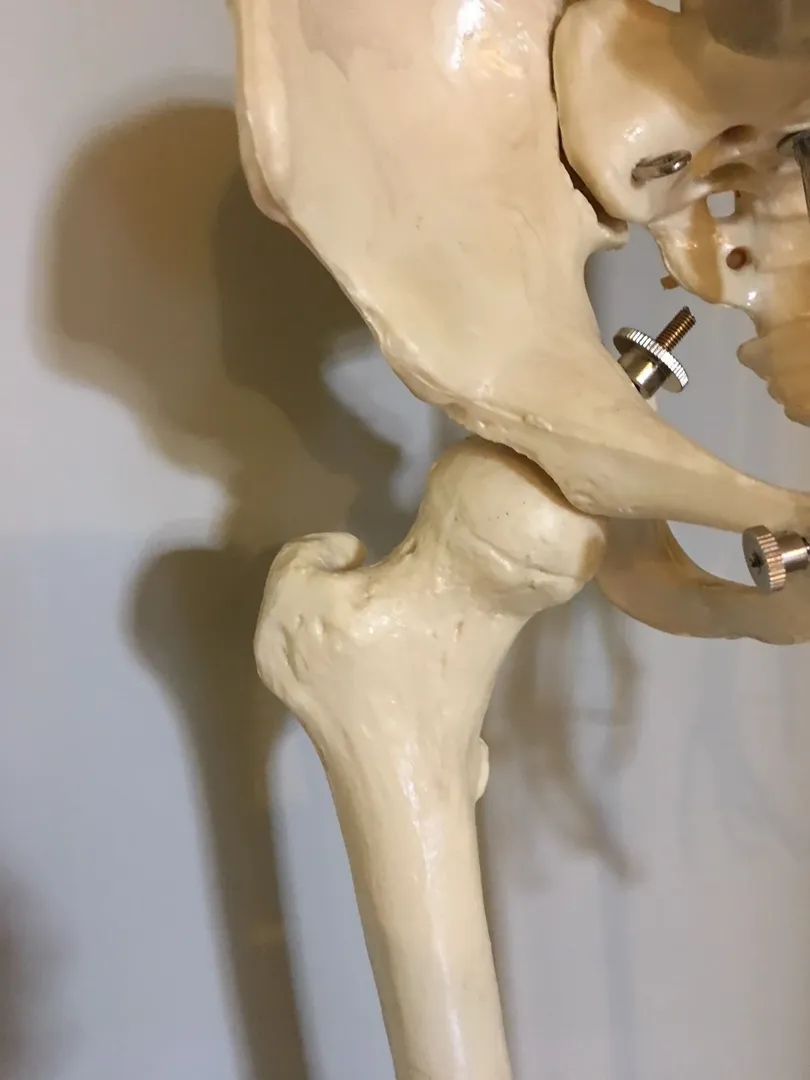
In this continuing series on Evidence Based Medicine I’d like to write about osteoporosis and your risk of breaking a hip. Generally speaking, age and body size are the two main indicators of bone loss. And, just like blood pressure in heart disease, we’re not interested in your bone density, rather your risk of breaking a bone. As a general rule, the older we are, the more bone we lose while the bigger we are, the less we lose.
To be blunt, if your old and skinny, your risk of breaking a bone is higher than if you're old and chubby. Risk factors that increase your chance of breaking your hip include age, smoking, weight, and having a mom that broke her hip. As an example, if you are 65 years old, weight less than 125 lbs and smoke, your risk of breaking your hip in the next 10 years is 2.5% (i.e.: your risk of NOT breaking a hip is 97.5%). A good risk calculator that takes into account your individual risk factors can be found by at FRAX Canada.
Once you know your risk, taking a drug like Fosomax (a Bisphosphonate) will increase your risk of NOT having a fracture to 98.5% (a 1% reduction in risk). Taking calcium (1500mg) with vitamin D (800IU) gives the same 1% risk reduction as Fosomax and combining the two therapies lowers your risk by 2%. Bone scans are useful to help identify risk however because there is so much error in the test the best science available now tells us that DXA bone testing should be done at most once every 10 years.
Weight bearing exercise, calcium, vitamin D and a discussion with your doctor about a Bisphosphonate are reasonable approaches to reduce the risk of fracture by about 1% each over the next 5 years. If you are thinking to yourself that the risk of breaking a hip is lower than you thought and that the benefit of treatment is less than you thought, you’re not alone. Words like “high risk” and “low risk” must be translated into specific numbers to be able to make an informed decision on how to proceed with treatment.