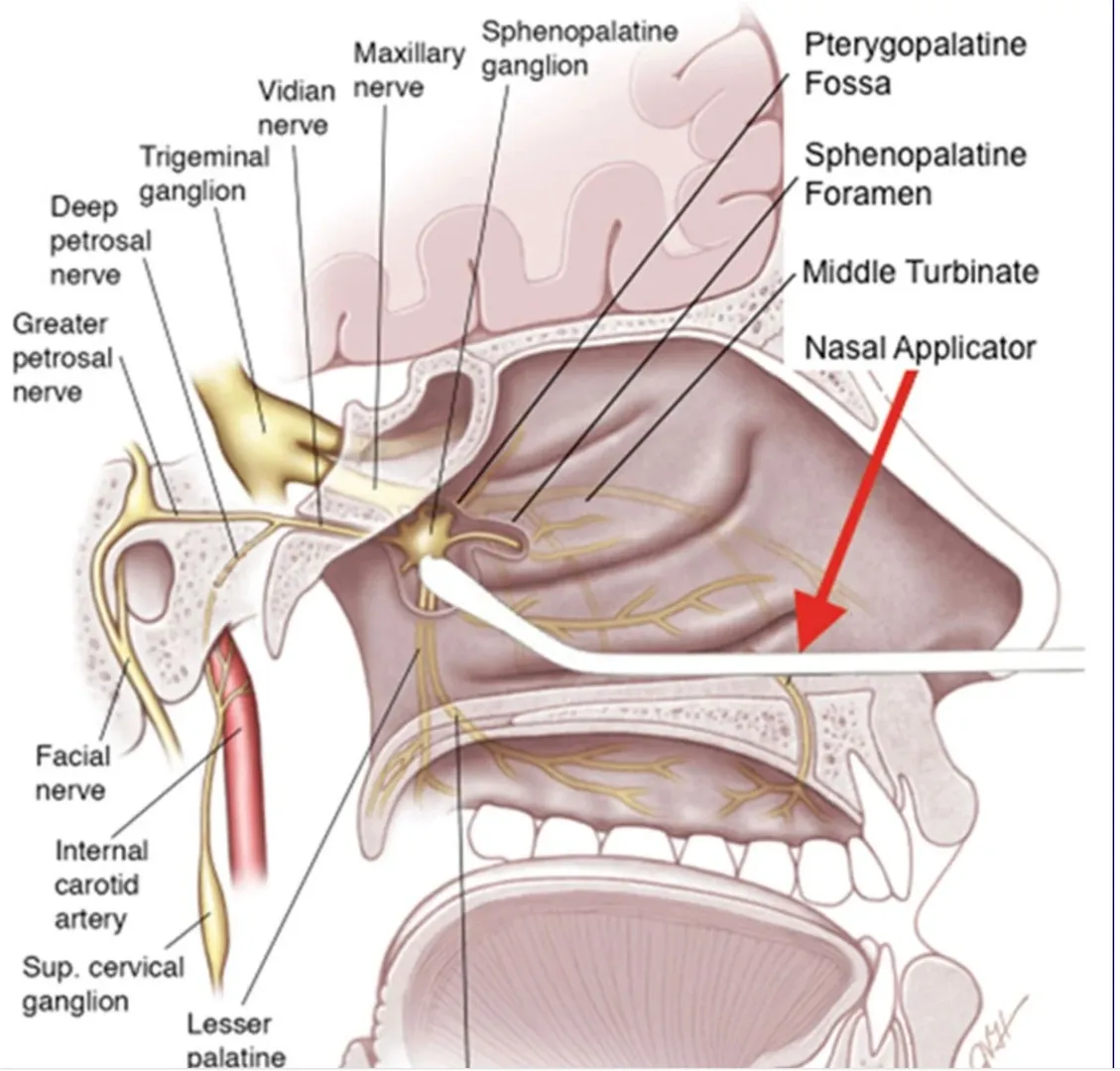
The sphenopalatine ganglion (SPG) is a cluster of nerves at the back of the nose that contains sensory nerves for the nasal passageway and autonomic nerves that control functions like tear formation and nasal discharge. The SPG is also associated with the trigeminal nerve which is a major player in headache disorders (migraines and cluster headaches) and can be the a part of atypical facial pain, chronic regional pain syndrome, TMJ and rhinitis.
During a migraine headache, the lining of the brain, called the meninges, becomes inflamed and activates pain receptors. These receptors transmit nerve signals through the trigeminal nerve which the brain interprets as pain. In migraines and cluster headaches, these signals travel through the SPG which in turn cause the nose and eyes to run. Nerve activity from the SPG also causes dilation of the cranial blood vessels which in turn activates inflammatory mediators that trigger the sensation of head pain.
It is thought that people who experience nausea, vomiting, sweating or runny eyes during a headache, or those with TMJ, atypical facial pain and CRPS might benefit from treating the SPG. The SPG block is a procedure that applies local anaesthetic to the SPG resulting in reduced nerve outflow from the SPG and reduced pain, nausea, nasal congestion, eye tearing and photosensitivity. The SPG block can be done several ways.
The method I prefer involves inserting a small flexible tubing, called a catheter, into each nostril about 3 cm and injecting 1.5cc of 2% procaine. As the anesthetic runs over the SPG it numbs the SPG nerves and slows the nerve outflow from the ganglion, resulting in reduced symptoms. The procedure is tolerated well by most people and within a matter of minutes the headache or facial pain starts to ease and can last hours to days and sometimes weeks.